




The Masterpiece of Himalayan High-Altitude Trekking
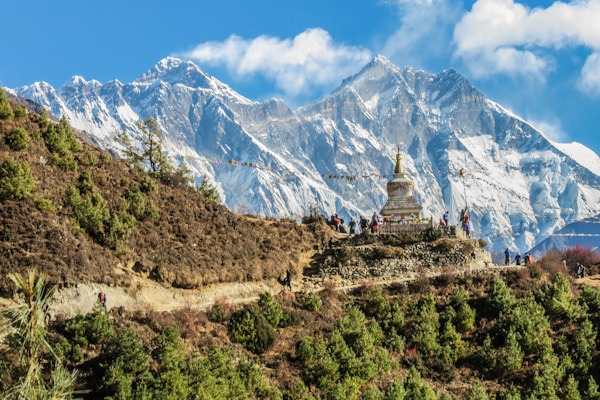
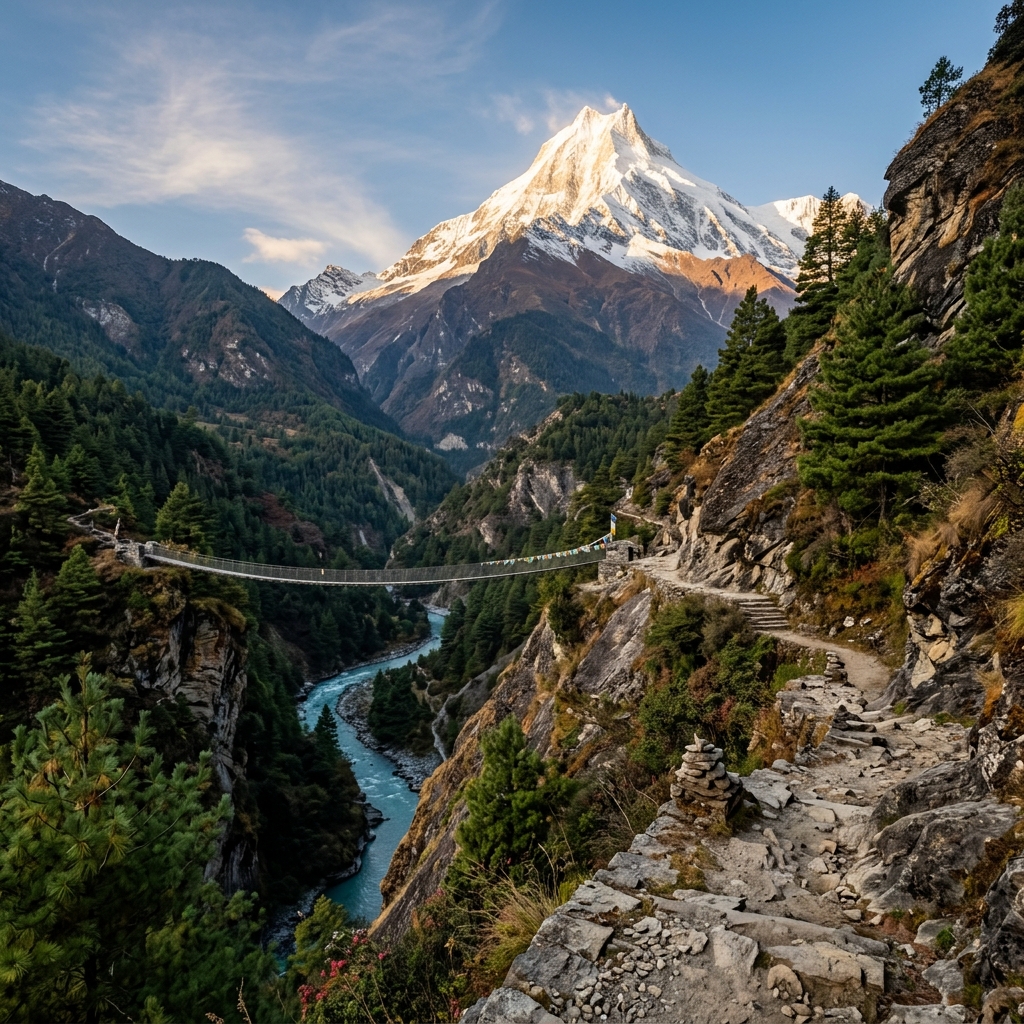
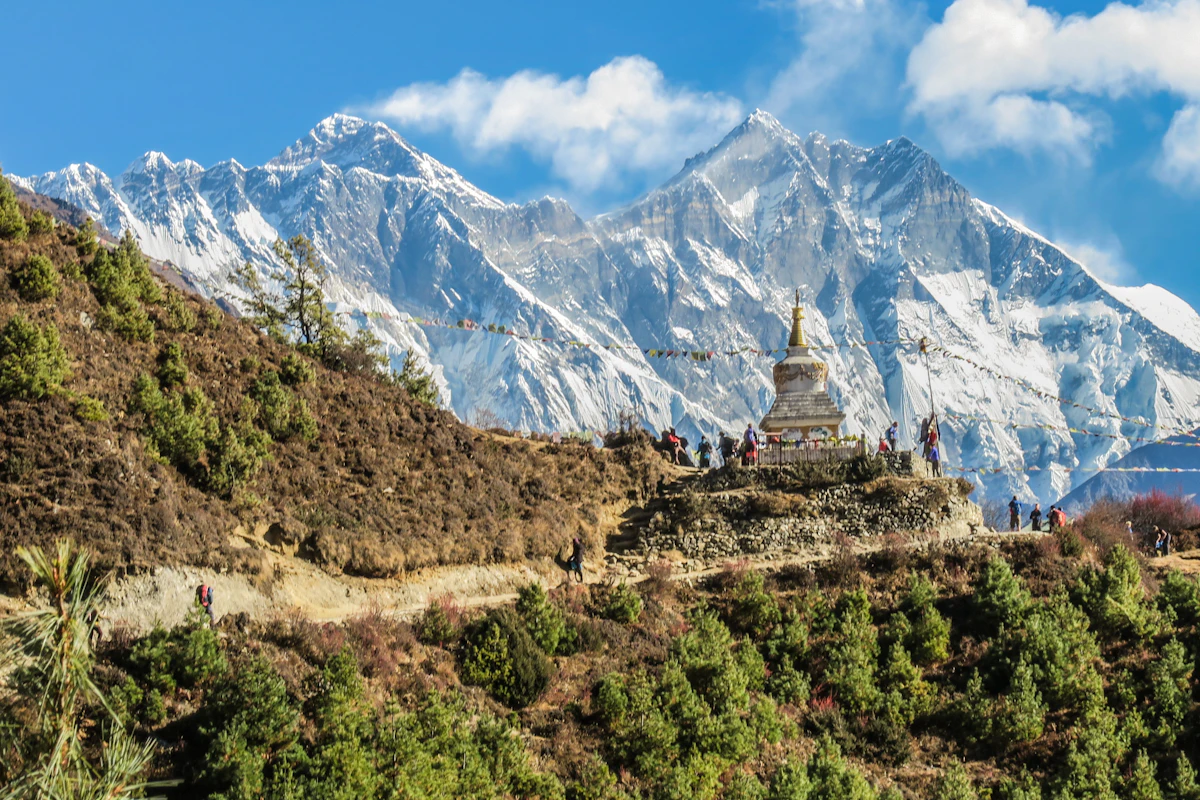
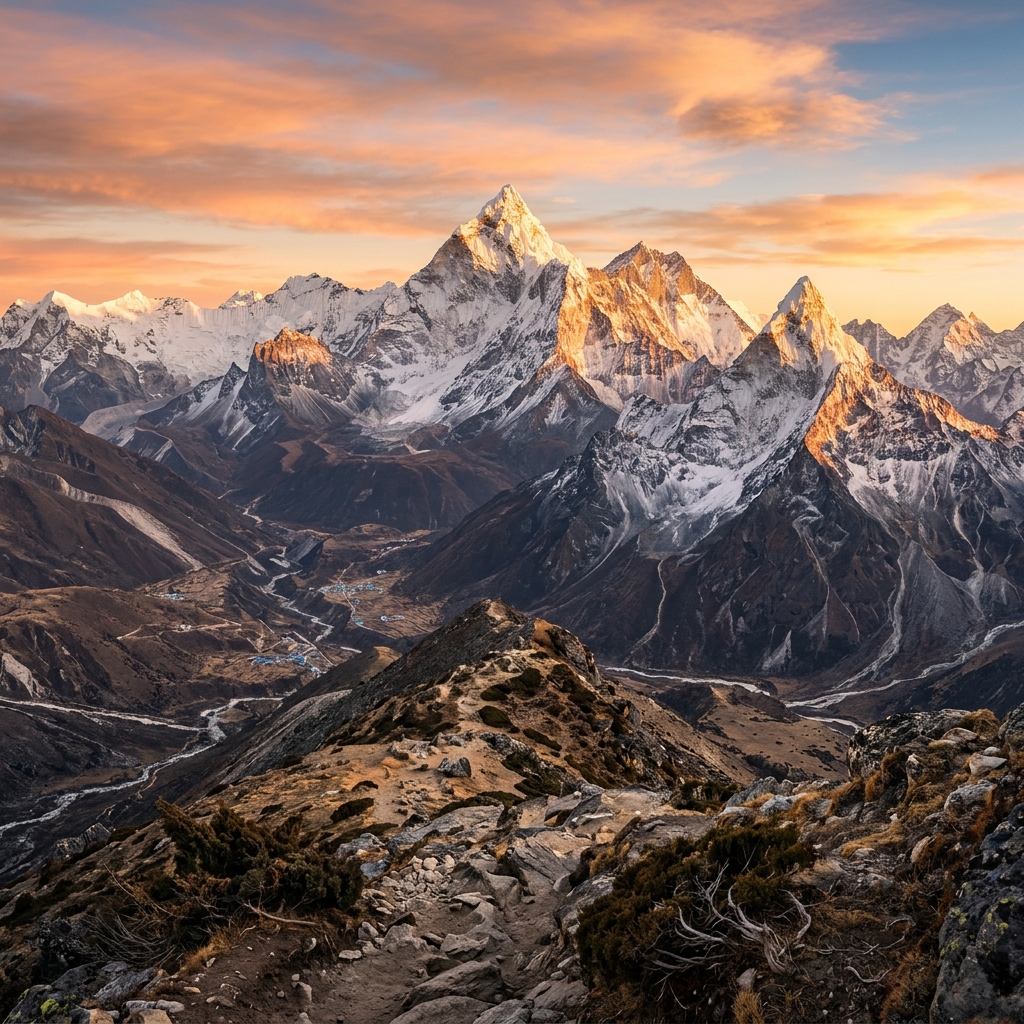
The Everest Three Passes Trek is widely celebrated by mountaineers as Nepal's ultimate non-technical high-altitude circuit. Rather than following the crowded highway to Base Camp, this 19-day traverse links the 4 secluded valleys of the Khumbu via 3 towering alpine passes exceeding 5,300 meters.
Renjo La Pass
Crossed from the remote Bhote Koshi valley. Drops directly down into the turquoise third lake of Gokyo with jaw-dropping views of Mount Everest, Lhotse, and Makalu reflecting across the water.
Cho La Pass
An alpine glacial saddle linking Gokyo to Dzongla and Khumbu. Features a thrilling traverse across a gentle snow glacier (microspikes provided) surrounded by dramatic ice towers.
Kongma La Pass
The highest and wildest of the three passes. Connects Lobuche directly to Chhukung across the Khumbu glacier moraine under the colossal, sheer vertical rock face of Mount Nuptse.
What Makes the Three Passes High Circuit Extraordinary:
Why Choose the Everest Three Passes Trek with Best Treks Nepal?
Crossing three 5,300m+ Himalayan alpine passes requires flawless logistics, technical route mastery, and uncompromised wilderness safety. Here is why discerning mountaineers choose Best Treks Nepal for the high circuit:
Proven Counter-Clockwise Acclimatization
5 progressive nights of elevation gain via Thame and Lumde before Renjo La (5,360m), ensuring our industry-leading 98.6% summit and pass success rate.
100% Native High-Pass Khumbu Sherpas
Led exclusively by licensed Sherpas born and raised in the Khumbu, with Wilderness First Responder (WFR) medical certifications and 10+ years of high-pass traverses.
Cho La Microspikes & Equipment Included
We supply tested elastomeric microspikes for glacial ice traverses, trekking poles, -20°C sleeping bags, and heavy-duty duffels with zero hidden rental fees.
Clinical Twice-Daily Pulse Oximetry
Morning and evening blood oxygen saturation (SpO2%) tracking, Lake Louise AMS scoring, medical oxygen cylinders, and comprehensive emergency pharmacy.
24/7 Satellite Tracking & Fast Heli Dispatch
Direct Garmin inReach satellite link with our Kathmandu emergency flight desk for rapid 90-minute Airbus H125 rescue helicopter deployment when required.
15% Flexible Deposit & Free Rescheduling
Lock in your 2026/2027 high-pass dates with just 15% deposit ($284). Enjoy free date adjustments and lifetime deposit transferability up to 30 days before departure.
Comprehensive 19-Day Itinerary
Carefully sequenced for optimal acclimatization and safe high-altitude pass crossings.
Day 1
Fly to Lukla (2,840m) & Trek to Phakding (2,610m)
Early morning scenic flight to Tenzing-Hillary Airport in Lukla. Meet your Sherpa support crew, pack expedition duffels, and begin walking along the Dudh Koshi River through stone-paved Sherpa villages, pine forests, and mani walls to Phakding.
Day 2
Trek Phakding to Namche Bazaar (3,440m)
Cross the iconic high Hillary Suspension Bridge, enter Sagarmatha National Park at Monjo, and ascend the steep pine forest ridge to Namche Bazaar. Enjoy your first glimpse of Mount Everest, Lhotse, and Nuptse from Top Danda.
Day 3
Acclimatization Day in Namche Bazaar & Hotel Everest View (3,880m)
Climb high and sleep low. Hike up to the world's highest luxury hotel, Hotel Everest View (3,880m), for coffee with a 360-degree panorama of Ama Dablam, Thamserku, and Everest. Visit the Hillary School and Khumjung Monastery before returning to Namche.
Day 4
Trek Namche Bazaar to Thame (3,820m)
Leave the main EBC highway behind and branch west into the tranquil Bhote Koshi valley. Thame is the ancestral home of Apa Sherpa and Tenzing Norgay. Visit the 14th-century Thame Dechen Chokhorling Gompa perched atop a sheer cliff.
Day 5
Trek Thame to Lumde / Marlung (4,380m)
Ascend gently along the ancient yak caravan trading route toward Nangpa La (Tibet border). The landscape turns raw and alpine with grazing Himalayan yaks, snowcock birds, and dry stone shepherd huts at Lumde, the launchpad for Renjo La.
Day 6 ★ Pass 1
Cross Renjo La Pass (5,360m) & Descend to Gokyo (4,790m)
First High Pass Conquest: Early 05:30 AM departure. Ascend zig-zagging stone steps past frozen alpine tarns to the prayer-flag-strewn crest of Renjo La Pass (5,360m). The view over the 3rd Lake of Gokyo and the Everest-Lhotse-Makalu wall is widely regarded as the most beautiful vista on Earth. Descend to Gokyo village.
Day 7
Ascend Gokyo Ri (5,357m) & Trek to Thagnak (4,700m)
Pre-dawn climb up Gokyo Ri (5,357m) for a golden sunrise striking the summit cones of Mount Everest, Lhotse, Makalu, and Cho Oyu. Afternoon gentle 2-hour walk across the Ngozumpa Glacier moraine to Thagnak at the foot of Cho La.
Day 8 ★ Pass 2
Cross Cho La Pass (5,420m) & Trek to Dzongla (4,830m)
Second High Pass Conquest: Climb steep rock gullies to the edge of the Cho La glacier. Strap on microspikes and traverse the gentle ice field to the crest of Cho La Pass (5,420m). Soak in jaw-dropping views of Cholatse (6,440m) and Baruntse before descending steep scree and rock fields to Dzongla.
Day 9
Trek Dzongla to Lobuche (4,940m)
A short, scenic transition day contouring above Dughla and the moraine of the Khumbu Glacier. Outstanding close-up perspectives of Nuptse, Pumori, and Ama Dablam. Rest and prepare for the Base Camp and Kongma La push.
Day 10
Trek Lobuche to Gorak Shep (5,164m) & Hike to Everest Base Camp (5,364m)
Trek along the lateral moraine of the Khumbu Glacier to Gorak Shep. Drop heavy packs, enjoy hot soup, and continue through glacial ridges to Everest Base Camp (5,364m). Stand at the base of the mighty Khumbu Icefall where summit expeditions stage their climbs.
Day 11
Sunrise Ascent of Kala Patthar (5,545m) & Trek to Lobuche (4,940m)
Early 04:30 AM push up Kala Patthar (5,545m) for the definitive close-up sunrise perspective of Mount Everest, South Col, and Nuptse. Descend to Gorak Shep for a warm breakfast and walk down to Lobuche to position for Kongma La.
Day 12 ★ Pass 3
Cross Kongma La Pass (5,535m) to Chhukung (4,730m)
The Final and Highest Col: 05:00 AM departure. Cross the undulating moraine of the Khumbu Glacier and ascend steep scree tracks past alpine lakes under the sheer black rock pyramids of Nuptse and Lhotse to reach Kongma La Pass (5,535m). Descend into the vast Imja Valley to Chhukung. Three Passes Completed!
Day 13
Optional Chhukung Ri (5,550m) & Trek to Dingboche (4,410m)
Optional morning climb of Chhukung Ri (5,550m) for dramatic views into the south face of Lhotse, Island Peak, and Makalu. Gentle afternoon stroll down the wide glacial valley to the sheltered stone-walled village of Dingboche.
Day 14
Trek Dingboche to Tengboche (3,860m)
Follow the Imja Khola past Pangboche and its ancient monastery. Walk through fragrant rhododendron and birch forests to Tengboche ridge. Attend afternoon monks' prayer chanting inside the famous Tengboche Monastery under the shadow of Ama Dablam.
Day 15
Trek Tengboche to Namche Bazaar (3,440m)
Descend to Phunki Thenga and climb the scenic balcony trail past Sanasa and Kyangjuma to Namche Bazaar. Enjoy a well-earned hot shower, freshly brewed espresso, and celebration pastries at the famous local German bakeries.
Day 16
Trek Namche Bazaar to Lukla (2,840m)
Final trekking day. Descend the Hillary Bridge ridge, pass Monjo and Phakding, and make the gentle final climb up to Lukla airstrip. Evening celebration party with your Sherpa guides and porters with traditional Sherpa songs and local dinner.
Day 17
Morning Flight Lukla to Kathmandu / Ramechhap
Board an early morning mountain twin-otter flight from Lukla back to Kathmandu (or Ramechhap with private VIP transfer). Check into your 4-star hotel in Thamel. Rest, refresh, and enjoy a leisure afternoon.
Day 18
Buffer Day in Kathmandu & UNESCO Sightseeing
Crucial weather contingency buffer day. If flights operated on schedule, explore Kathmandu's UNESCO World Heritage treasures: Swayambhunath (Monkey Temple), Pashupatinath, and ancient Patan Durbar Square, followed by a farewell dinner.
Day 19
Final Departure & Airport Transfer
Enjoy breakfast at your hotel. Private airport transfer to Tribhuvan International Airport (TIA) 3 hours prior to your scheduled flight home. Tashi Delek and see you on the next high Himalayan adventure!
Choose Your Expedition Experience
All packages include 100% guaranteed departures, roundtrip Lukla flights, high-pass microspikes, native Sherpa team, and comprehensive wilderness medical support.
Standard Alpine
- ✓18 Nights twin-share Sherpa lodge accommodation
- ✓All 3 fresh daily meals (Breakfast, Lunch, Dinner)
- ✓Roundtrip domestic flights (Kathmandu/Ramechhap ↔ Lukla)
- ✓Licensed English-speaking high-pass Sherpa guide
- ✓Porters (1 porter per 2 trekkers, max 15kg duffel)
- ✓Microspikes / crampons for Cho La & Kongma La
- ✓Sagarmatha National Park & Pasang Lhamu Permits
- ✓Twice-daily pulse oximeter & medical kit standby
Comfort Upgrade
- ✓Everything in Standard, plus:
- ✓En-suite attached bathroom rooms where available
- ✓4-Star Deluxe Hotel stay in Kathmandu (3 Nights)
- ✓Unlimited hot showers & battery device charging
- ✓Daily fresh fruit basket & post-trek massage voucher
- ✓Complimentary -20°C down jacket & sleeping bag rental
- ✓Guided UNESCO Kathmandu cultural day tour with entry
Luxury Heli Return
- ✓Everything in Comfort, plus:
- ✓Private Helicopter Flight from Chhukung/Gorak Shep to Kathmandu
- ✓Saves 4 days of grueling descent hiking
- ✓5-Star Luxury Heritage Hotel in Kathmandu (Dwarika's)
- ✓1:1 Dedicated Private Senior Sherpa Expedition Guide
- ✓Dedicated private porter per person
Automatic tier discounts applied based on your private party size.
Read Before You Book — High Pass Manual
Essential logistical, physical, and medical preparation required for crossing 3 Himalayan passes exceeding 5,300 meters.
High Passes Expedition Briefings
Click the topics below to explore mandatory pre-trek briefings
1. Physical Conditioning & High Pass Endurance +
The Everest Three Passes Trek is graded Strenuous (5/5) and represents the pinnacle of non-technical trekking in the Himalayas. Unlike standard EBC which follows valley trade routes, you will cross 3 towering alpine cols (Renjo La at 5,360m, Cho La at 5,420m, and Kongma La at 5,535m) where pass days require 7 to 9 hours of continuous movement on loose scree, steep boulder moraines, and snow.
| Preparation Phase | Weekly Focus | Target Milestone |
|---|---|---|
| Weeks 1–4 (Base) | Zone 2 cardio (running, cycling, swimming 3–4x/week) | 45-min sustained aerobic output without fatigue |
| Weeks 5–8 (Load) | Stairmaster & high-incline treadmill with 6–8kg pack | 60 flights of stairs + 10km weekend hill hikes |
| Weeks 9–12 (Peak) | Back-to-back outdoor hikes with 10–12kg pack | 6-hour consecutive hiking on steep, uneven trails |
2. Microspikes, Crampons & Glacial Traverses +
Crossing Cho La Pass (5,420m) requires traversing an active alpine glacier saddle situated between the Gokyo and Dzongla valleys. Depending on seasonal temperatures and recent snowfall, the glacier surface alternates between hard blue ice, packed snow, and wet firn.
What is Required vs Provided:
- Complimentary Microspikes Provided: Best Treks Nepal equips every climber with certified elastomeric steel-spiked microspikes (Kahtoola/Black Diamond style). These slip effortlessly over your trekking boots, providing exceptional traction without the cumbersome weight or rigidity of 12-point mountaineering crampons.
- Footwear Requirements: Sturdy, waterproof mid-to-high cut trekking boots with Vibram outsoles and rigid ankle support are mandatory. Trail runners are strictly forbidden on high pass crossing days due to sharp scree and freezing temperatures.
- Trekking Poles: Telescopic trekking poles with carbide tips and snow baskets are essential for balance across boulder fields and glacial moraines.
3. 19-Day Proven Counter-Clockwise Acclimatization +
The sequence of your circuit directly dictates your safety and success rate. Best Treks Nepal exclusively utilizes a counter-clockwise route (Lukla → Namche → Thame → Lumde → Renjo La → Gokyo → Cho La → EBC → Kongma La → Dingboche → Lukla).
| Routing Direction | Acclimatization Profile | Summit & Pass Success |
|---|---|---|
| Our Counter-Clockwise Route | 5 progressive nights below 4,400m before Renjo La (5,360m) | 98.6% Completion Rate |
| Standard Clockwise Route | Rushes to Kongma La (5,535m) on Day 5 or 6 with rapid 1,200m gain | High AMS evacuation rate (<75% pass rate) |
Our itinerary incorporates 3 dedicated active acclimatization days: climbing to the Hotel Everest View (3,880m), summiting Gokyo Ri (5,357m) at dawn, and ascending Kala Patthar (5,545m) for panoramic sunset views over Everest.
4. Lukla Flights & Ramechhap Seasonal Operations +
Flights to Tenzing-Hillary Airport in Lukla (2,840m) are operated by twin-otter STOL (Short Take-Off and Landing) aircraft (Tara Air, Summit Air, Sita Air). Due to air traffic congestion at Tribhuvan International Airport in Kathmandu, the Civil Aviation Authority of Nepal (CAAN) mandates seasonal departure points:
- Peak Seasons (Oct–Nov & Mar–May): Flights operate from Ramechhap / Manthali Airport. Best Treks Nepal arranges private air-conditioned tourist vehicles departing Kathmandu at 1:30 AM (approx. 4-hour scenic highway transfer) to connect with morning flights.
- Off-Peak Seasons (Dec–Feb & Jun–Sep): Flights operate directly from Kathmandu Airport domestic terminal.
- Weather Buffers: Mountain weather in the Dudh Koshi valley can change rapidly. Our 19-day itinerary includes Day 18 as an essential contingency day in Kathmandu to absorb any weather holds without risking your international flights home.
5. High-Altitude Remote Teahouse Facilities +
Teahouse lodges in the Everest region offer authentic Sherpa hospitality, clean twin-bedded rooms, and communal heated dining halls. As you ascend past Namche Bazaar into remote high-pass outposts (Lumde, Thagnak, Dzongla, and Gorak Shep), facilities become simpler and more alpine in character:
- Rooms: Twin beds with clean sheets, pillows, and foam mattresses. Wooden partition walls provide privacy. We provide complimentary -20°C goose down sleeping bags and fleece liners so you stay toasty regardless of outside temperatures.
- Heating: The central dining hall is heated every evening from 5:00 PM to 9:00 PM using dried yak-dung stoves—an eco-friendly, carbon-neutral Himalayan heating tradition. Bedrooms are unheated to prevent moisture buildup.
- Toilets & Bathrooms: Lower elevations feature Western flush toilets with attached bathrooms (standard in our Comfort Tier). Above 4,500m, shared Western and traditional squat toilets are standard. Hot gas showers are available throughout the trail ($4–$7 in Standard, 100% included in Comfort & Luxury tiers).
6. Mountain Menus & High-Calorie Nutrition +
Crossing 3 high cols expends between 3,500 and 4,800 calories daily. Best Treks Nepal packages include 3 full-board meals each day (Breakfast, Lunch, and Dinner) selected straight from comprehensive teahouse menus:
- Breakfast: Porridge with honey, Tibetan bread, hash browns, eggs (fried, boiled, scrambled, omelettes), pancakes, muesli with hot milk, hot lemon tea, and freshly brewed coffee.
- Lunch & Dinner: The legendary "Dal Bhat Power 24 Hour" (unlimited steamed rice, lentil soup, spiced vegetable curry, spinach, and crispy papadum), vegetable noodle thukpa, Sherpa potato stew, vegetable momos (steamed dumplings), macaroni cheese, and garlic soup (a natural altitude vasodilator).
- Dietary Accommodations: We easily cater to vegetarian, vegan, gluten-free, dairy-free, and nut-allergy diets. Our guides coordinate directly with kitchen staff at every lodge to ensure safe, cross-contamination-free meal preparation.
7. Clinical Twice-Daily Medical Diagnostics (AMS Protocol) +
Your safety is managed by Wilderness First Responder (WFR) certified Sherpa expedition leaders. We operate a clinical high-altitude health monitoring protocol across all 19 days:
- Twice-Daily Pulse Oximetry Logs: Every morning at 7:00 AM and evening at 6:30 PM, your guide logs your blood oxygen saturation (SpO2%) and resting pulse rate in the expedition medical registry.
- Lake Louise AMS Scoring System: We quantitatively assess 5 clinical indicators: headache severity, gastrointestinal distress/nausea, fatigue, dizziness/lightheadedness, and sleep quality.
- Expedition Medical Kit: Every guide carries medical oxygen cylinders, a comprehensive high-altitude emergency pharmacy (Diamox/Acetazolamide, Dexamethasone, Nifedipine, antibiotics, oral rehydration salts), and emergency trauma dressings.
8. Mandatory 6,000m Helicopter Travel Insurance +
Because the Three Passes Trek crosses terrain up to 5,545m (Kala Patthar) and 5,535m (Kongma La), you must possess travel insurance that explicitly covers emergency medical evacuation and helicopter rescue up to 6,000 meters.
Trusted Global Underwriters with Direct Nepal Heli-Coordination:
- Global / North America: World Nomads (Explorer Plan), Ripcord Rescue Travel Insurance, Global Rescue, Allianz Global Assistance.
- Europe / UK: Austrian Alpine Club (ÖAV), British Mountaineering Council (BMC), Campbell Irvine, True Traveller (Extreme Adventure Pack).
- Australia / NZ: Cover-More (Adventure Plus), Fast Cover, 1Cover.
9. Luggage Weights & IPPG Ethical Porter Protection +
Best Treks Nepal strictly adheres to the international guidelines set forth by the International Porter Protection Group (IPPG) and the Trekking Agencies' Association of Nepal (TAAN):
- Weight Allowance: You are provided with a heavy-duty, waterproof 90L expedition duffel bag. The maximum weight limit is 15 kg (33 lbs) per client. Two clients' duffels are paired for one porter (maximum 30 kg combined load).
- Your Daily Pack: You carry only a lightweight daypack (28–35 liters, approx. 4–6 kg) containing your water bottles, rain gear, warm fleece layer, camera, sunscreen, lip balm, and daily medications.
- Porter Welfare Guarantee: All our porters receive fair living wages, medical insurance, high-altitude gear (windproof jackets, insulated pants, mountaineering boots, UV sunglasses, and gloves), and warm teahouse lodging with full meals.
10. Electricity, Device Charging & Everest Link Wi-Fi +
Staying connected and keeping cameras charged across 19 days in the Himalayas is straightforward with proper planning:
- Device Charging: Teahouse dining rooms provide multi-plug charging stations powered by solar arrays and local micro-hydro turbines. Charging costs $2–$4 for phones and $5–$8 for large power banks (all included in Comfort & Luxury tiers).
- Power Bank Recommendation: We recommend bringing a high-quality 20,000mAh power bank (Anker or similar). Keep batteries inside your sleeping bag at night—sub-zero temperatures cause lithium batteries to drain rapidly if exposed to the cold.
- Everest Link Wi-Fi: High-speed Wi-Fi cards can be purchased in teahouses (10GB card for ~$15 USD, 20GB for ~$25 USD). These work seamlessly across almost all lodges on the circuit (Lukla, Namche, Thame, Gokyo, Dzongla, Gorak Shep, and Dingboche).
- Cellular SIM Cards: Local NTC and Ncell 4G SIM cards work reliably up to Namche Bazaar and Tengboche, with intermittent coverage in Gokyo and Dingboche.
11. Nepal On-Arrival Visa & Seamless Permits +
Entering Nepal and securing high-altitude national park permits is simple and hassle-free:
- On-Arrival Visa: Most nationalities receive a tourist visa upon arrival at Tribhuvan International Airport (KTM) in Kathmandu. Fee structure: 15 Days ($30 USD), 30 Days ($50 USD - Recommended for 19-Day Trek), 90 Days ($125 USD). Payment can be made in cash (USD, EUR, GBP, AUD) or major credit cards.
- Passport Validity: Ensure your passport has at least 6 months of remaining validity from your date of arrival and at least 2 blank visa pages.
- All Permits Included: Best Treks Nepal organizes and covers 100% of required government permits: Sagarmatha National Park Entry Permit and the Khumbu Pasang Lhamu Rural Municipality Regional Permit. You simply supply us with a passport scan upon booking.
12. Trail Currency, ATMs & Sherpa Tipping Etiquette +
While all major trek expenses (flights, lodges, permits, meals, and guides) are covered in your package, you will need local currency (Nepalese Rupees - NPR) for personal trail incidentals:
- Recommended Cash Budget: We recommend withdrawing NPR 25,000 to 35,000 ($200–$280 USD) in Kathmandu or Namche Bazaar. This covers hot showers, Wi-Fi cards, bakery treats, extra boiled drinking water, and personal souvenirs.
- ATMs on Trail: Namche Bazaar (3,440m) is the last location with functioning ATMs. However, mountain ATMs can occasionally run out of cash or lose satellite connection; withdraw your rupees in Kathmandu before departure.
- Sherpa Guide & Porter Tipping: Tipping is a cherished Himalayan tradition honoring the hard work of your mountain crew. A standard guideline is 10% to 15% of the total trip cost, pooled and distributed to your lead guide, assistant guides, and porters on the final evening in Lukla.
19-Day Altitude Profile & High Pass Traces
Trace the complete circuit elevation across Renjo La (5,360m), Gokyo Ri (5,357m), Cho La (5,420m), EBC (5,364m), Kala Patthar (5,545m), and Kongma La (5,535m).
Everest High Passes Weather & Temperature Model
Calculated using thermodynamic lapse rates for high-altitude passes and valley teahouse villages.
Guaranteed Fixed Departures
Join a confirmed small group (maximum 10 climbers) or request your private customized departure date.
| Departure Date | Return Date | Season & Status | Price / Pax | Action |
|---|---|---|---|---|
| Apr 08, 2026 | Apr 26, 2026 | ● Guaranteed (3 spots left) | $1,890 USD | Book Seat |
| Apr 22, 2026 | May 10, 2026 | ● Guaranteed (4 spots left) | $1,890 USD | Book Seat |
| May 06, 2026 | May 24, 2026 | ● Guaranteed (5 spots left) | $1,890 USD | Book Seat |
| Sep 25, 2026 | Oct 13, 2026 | ● Guaranteed (6 spots left) | $1,890 USD | Book Seat |
| Oct 10, 2026 | Oct 28, 2026 | ● Peak Autumn (4 spots left) | $1,890 USD | Book Seat |
High Altitude Teahouses & Expedition Dining
What to expect inside the remote mountain lodges of the Khumbu and Bhote Koshi valleys.
Authentic Sherpa Teahouses
Comfortable twin-bedded wooden rooms with foam mattresses and heavy blankets. Lower valleys feature en-suite rooms; remote pass villages (Lumde, Dzongla) feature shared alpine bathrooms and warm communal dining halls.
High-Energy Mountain Fuel
All-you-can-eat Dal Bhat (lentils, rice, vegetables), garlic soup, Sherpa noodle stews, porridge, eggs, yak cheese pasta, and fresh bakery items in Namche and Dingboche.
Power, Solar & Connectivity
Solar and micro-hydro charging hubs in every dining room. Everest Link Wi-Fi cards offer reliable connectivity even in high settlements like Gokyo and Chhukung.
Eco Hydration & Hot Showers
Gas-geyser hot showers available throughout the trek ($4–$7). We practice plastic-free travel: drink boiled water or purified water using tablets/filters.
Wilderness Medical Standards & Rescue
Every guide is Wilderness First Responder (WFR) certified with strict medical escalation protocols.
Twice-Daily Pulse Oximetry
Blood oxygen saturation (SpO2) and heart rate logs are recorded morning and night to detect asymptomatic altitude sickness early before crossing passes.
Emergency Medical Kit & Microspikes
Expedition pharmacy with Diamox (Acetazolamide), Dexamethasone, portable medical oxygen, and traction microspikes for icy pass saddles.
24/7 Satellite Heli Evacuation
Garmin inReach satellite tracking connected to our Kathmandu dispatch center. In severe medical emergencies, rescue helicopters arrive within 90–120 minutes.
100% Native Sherpa Leadership
Born and raised in the high Khumbu valley, our Sherpa leaders possess unmatched physiological adaptation and decades of pass-crossing experience.
Essential High Passes Gear Checklist
Proper layering is critical for temperature swings ranging from +18°C in valleys to -15°C on dawn pass crossings.
Upper Body & Warmth:
- -20°C Down Jacket (included/rental)
- Hard-shell waterproof Gore-Tex jacket
- Thermal merino base layers (2–3 sets)
- Fleece mid-layer jacket
Footwear & Traction:
- Sturdy, broken-in trekking boots (waterproof)
- Microspikes / crampons (provided)
- Wool trekking socks (5 pairs)
- Camp sandals / slip-on shoes
Trekking Equipment:
- 28–35L Daypack with rain cover
- -15°C to -20°C Sleeping bag
- Trekking poles (adjustable lock)
- UV Category 3/4 Glacier sunglasses
Reserve Your Everest Three Passes Expedition
Secure your 2026/2027 departure dates with a 15% flexible deposit ($284). Remainder payable in Kathmandu upon arrival.
Verified Climber Reviews
Independent reviews from adventurers who crossed the 3 high passes with our Sherpa team.
"Crossing Kongma La after Cho La was pure magic. Pemba Sherpa paced our group perfectly. We never felt rushed and the twice-daily oximeter checks gave huge peace of mind."
"Infinitely better than standard EBC. The views from Renjo La over the Gokyo lakes made me cry. Best Treks Nepal handled the flights and lodges seamlessly."
Frequently Asked Questions
Direct technical answers regarding routes, safety, microspikes, and teahouse logistics.
Route Difficulty How difficult is the Three Passes Trek compared to standard EBC?
The Three Passes Trek is graded Strenuous (5/5), whereas classic EBC is rated Moderate-to-Challenging (4/5). While standard EBC follows established valley trade routes, the Three Passes traverses 3 high alpine passes above 5,300m involving loose moraines, boulder hopping, and crossing an active snow glacier on Cho La.
Circuit Direction Why do you trek counter-clockwise instead of clockwise?
Counter-clockwise via Thame and Lumde allows 5 progressive acclimatization nights before crossing your first pass (Renjo La at 5,360m). This gradual altitude progression results in our industry-leading 98.6% pass completion rate.
Clockwise routes rush trekkers up to Kongma La (5,535m) too quickly on Day 5 or 6, leading to high rates of Acute Mountain Sickness (AMS) and early trip abandonment.
Trail Options What if I cannot or prefer not to cross a specific pass during the trek?
We maintain an optimal guide-to-trekker ratio (1 lead guide + assistant guides for groups). If severe weather occurs or a trekker feels fatigued, an assistant guide safely escorts them along lower valley trails (such as from Gokyo down to Phortse and up to Dingboche) to rejoin the main group without needing to cross Cho La or Kongma La.
Technical Gear Do I need technical mountaineering skills, ropes, or heavy crampons?
No technical mountaineering skills, climbing harnesses, or ropes are required. Best Treks Nepal provides high-grade elastomeric microspikes for traction on the icy Cho La glacier pass. Sturdy, waterproof trekking boots with good ankle support and broken-in soles are all you need.
Flight Logistics What happens if Lukla mountain flights are delayed by weather?
Our 19-day itinerary incorporates Day 18 in Kathmandu as an essential contingency buffer day. During peak trekking season (Oct–Nov and Mar–Apr), flights often operate via Ramechhap Airport (a scenic 4-hour transfer from Kathmandu) to avoid Kathmandu valley air traffic. In rare instances of extended groundings, our operations desk arranges shared helicopter charters.
Porter Support What is the luggage weight limit, and how do porters handle my bag?
We provide a heavy-duty 90L waterproof expedition duffel bag for your main gear. The weight limit is 15 kg (33 lbs) per person, carried by our dedicated porter team (1 porter per 2 trekkers, max 30 kg combined). You carry only a lightweight daypack (28–35L) with water, rain shell, camera, and daily snacks.
Teahouse Lodges Are hot showers, battery charging, and Wi-Fi available at high pass lodges?
Yes. Gas-heated hot showers ($4–$7) and solar device charging ($2–$5) are available in teahouse dining halls throughout the trek (all included in our Comfort and Luxury tiers). Everest Link Wi-Fi cards can be purchased along the trail for dependable messaging even in high villages like Gokyo and Chhukung.
Dining & Nutrition What meals are served, and can you accommodate vegan or gluten-free diets?
All 3 daily meals (Breakfast, Lunch, and Dinner) are included. Menus feature hot porridge, eggs, pancakes, fresh Dal Bhat (unlimited lentils, rice, curry), pasta, potato stews, momos, and soups. We effortlessly cater to vegetarian, vegan, gluten-free, and dairy-free diets—our guides coordinate directly with kitchen staff at every lodge.
Eco Hydration How do we obtain safe drinking water across the high circuit?
In accordance with Sagarmatha National Park's plastic-free guidelines, single-use plastic bottles are discouraged. We recommend carrying two 1-liter reusable Nalgene or insulated flasks. Boiled water is available at every lodge ($1.50–$3/liter), or you may use purification tablets/filters (like Katadyn BeFree or Aquatabs).
Altitude Medicine How do guides monitor Acute Mountain Sickness (AMS) on the trail?
Your Wilderness First Responder (WFR) certified Sherpa conducts twice-daily clinical pulse oximetry diagnostics, logging your SpO2 blood oxygen saturation and heart rate every morning and night. We evaluate symptoms using the international Lake Louise Scoring system, carry emergency medical oxygen, and maintain emergency Diamox/Dexamethasone protocols.
Emergency Rescue How does emergency helicopter evacuation work if someone falls severely ill?
In the rare event of severe medical distress (e.g. HAPE or HACE), your guide triggers our 24/7 Garmin inReach satellite link. Our Kathmandu flight command immediately dispatches a high-altitude Airbus H125 rescue helicopter. Evacuation to an accredited hospital in Kathmandu typically takes 90–120 minutes. All trekkers must have travel insurance covering medical evacuation up to 6,000 meters.
Deposit & Solos What deposit is required, and can solo trekkers join without extra fees?
You can reserve your 2026/2027 departure with a 15% flexible deposit ($284). The remaining balance is payable upon arrival in Kathmandu. We offer 100% free date rescheduling up to 30 days before departure.
Solo trekkers can join our guaranteed small-group departures (max 10 trekkers) with zero single supplement fee by sharing twin rooms with a same-gender traveler, or choose a private single-room upgrade.
Have specific technical or route questions?
Our senior expedition leaders and Kathmandu operations team are available 24/7 on WhatsApp.