
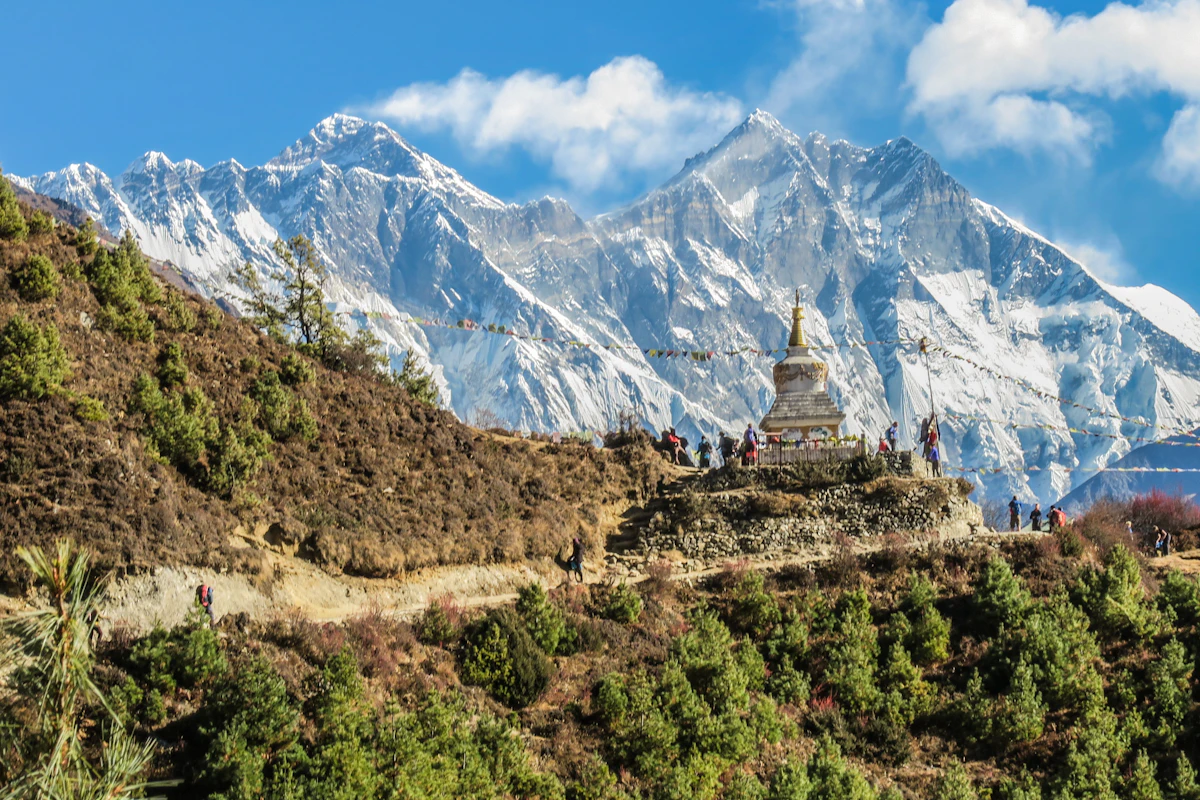
1. The 4 Distinct Himalayan Seasons (Pros, Cons & Weather)
Nepal experiences four primary seasons, each offering a drastically distinct trekking environment. Choosing the right season determines your trail views, temperature extremes, crowds, and flight reliability:
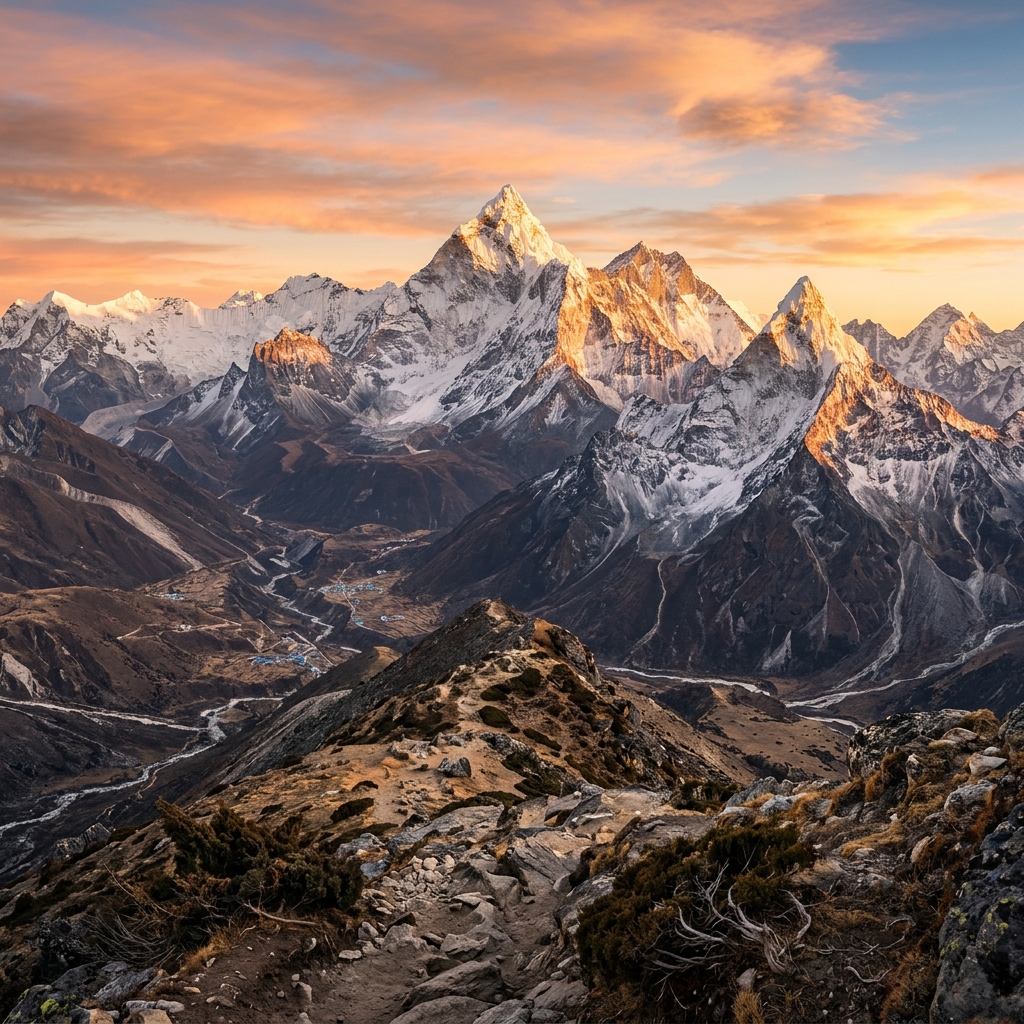
The Undisputed King of Himalayan Trekking
Post-monsoon air is washed pristine and free of dust. Offers 95%+ clear sunny days, razor-sharp mountain photography, comfortable daytime trekking temps (15°C), and festive vibes.
- ✓ Mountain Views: Unrivaled 360° visibility from sunrise to sunset.
- ✓ Ideal For: Everest Base Camp, Annapurna Circuit, Manaslu, Gokyo, Kanchenjunga.
- ⚠️ Trade-off: Busiest trails and teahouses; requires booking flights & rooms 3–6 months early.
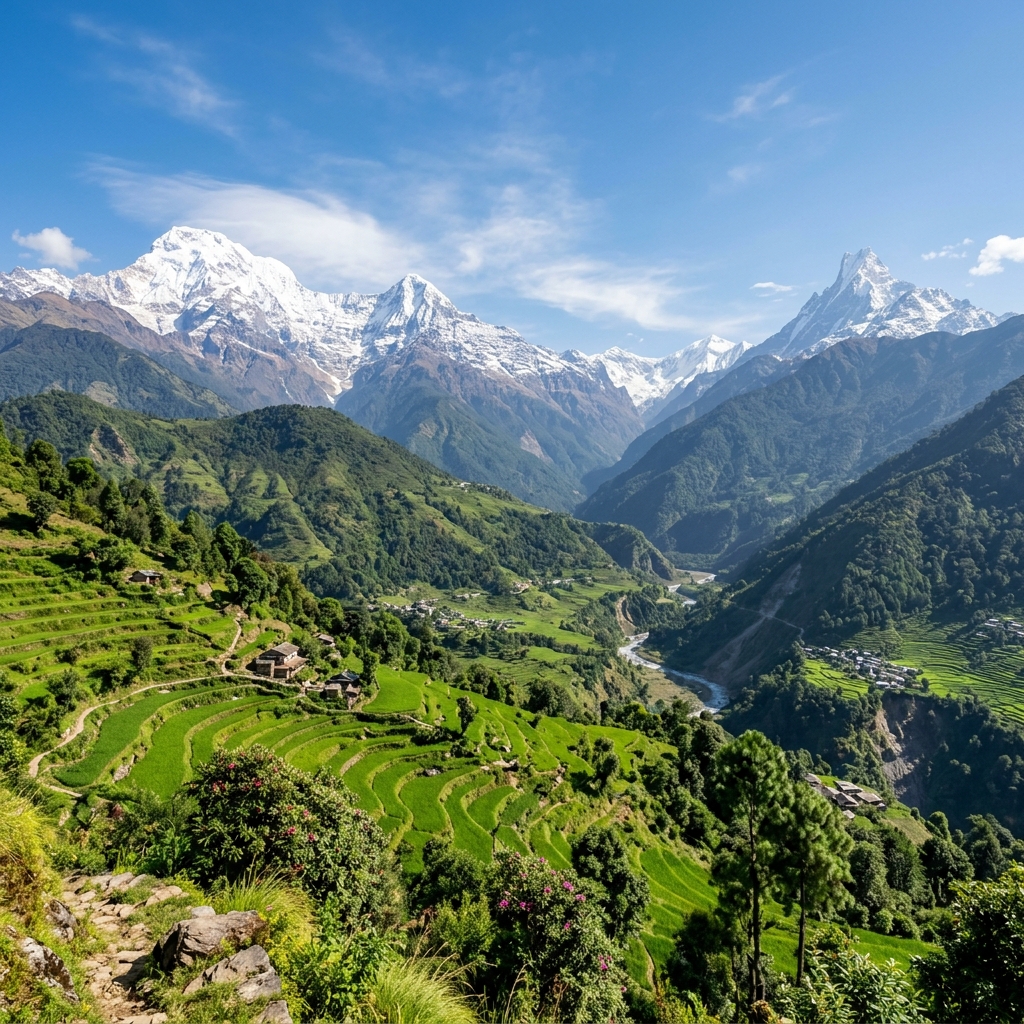
The Floral Symphony & High-Altitude Warmth
Warming temperatures, longer daylight hours, and hillsides ablaze in vibrant pink, red, and white rhododendrons and magnolias below 3,500m. High alpine snows melt, opening high passes.
- ✓ Flora & Nature: Lush blooming forests and active Himalayan wildlife.
- ✓ Ideal For: Annapurna Sanctuary, Langtang Valley, Mardi Himal, Everest 3 Passes.
- ⚠️ Trade-off: Afternoon haze and pre-monsoon convective clouds can obscure late afternoon views.
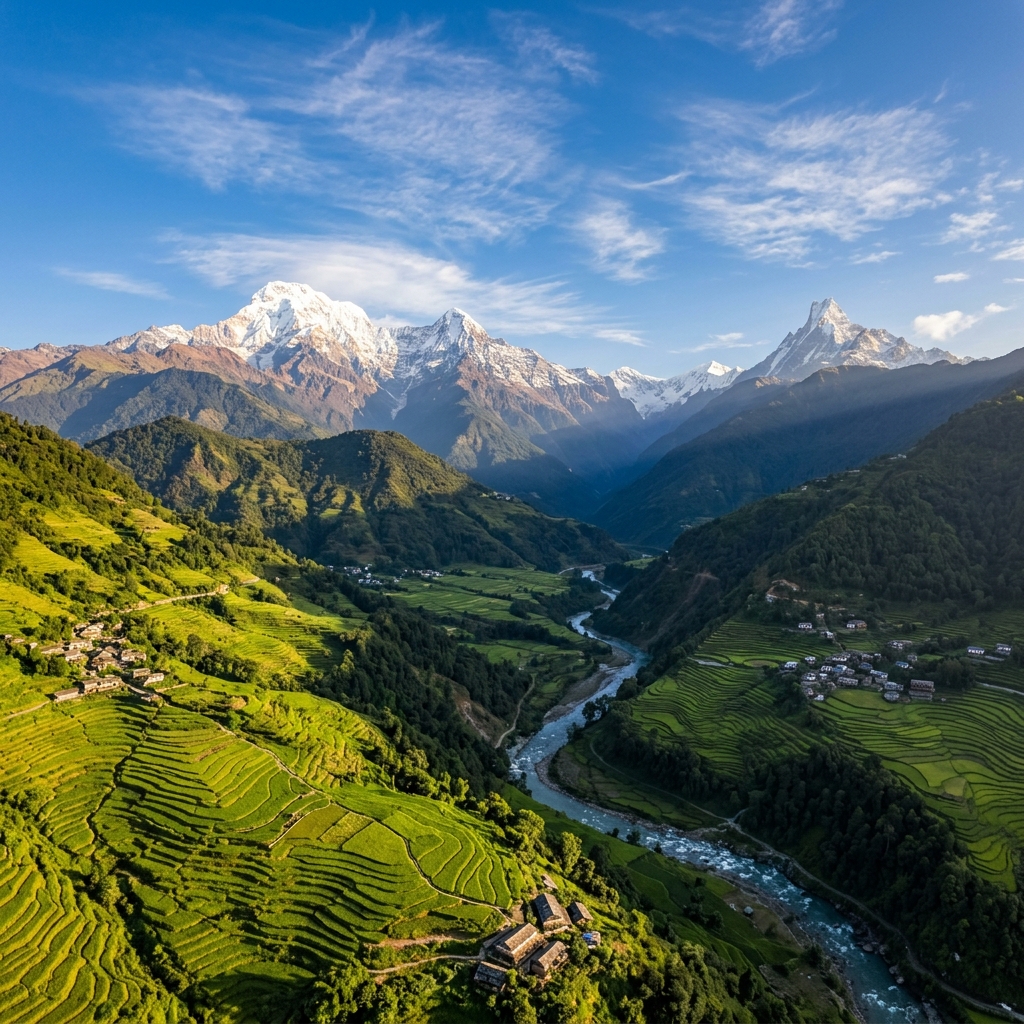
Trans-Himalayan Deserts & Lush Valleys
Heavy rains saturate southern valleys, bringing leeches and cloud cover. However, trans-Himalayan rain-shadows behind 8,000m massifs remain completely dry and bathed in golden sunshine.
- ✓ Rain-Shadow Paradise: Upper Mustang, Upper Dolpo, and Nar Phu are dry, sunny, and lush.
- ✓ Crowds: Zero crowds, authentic Tibetan Buddhist festivals (Tiji Festival).
- ⚠️ Trade-off: Southern access roads can be muddy; Lukla mountain flights face frequent delays.
Pristine Snow Panoramas & Serene Solitude
Crisp, dry, and crystal-clear winter skies with zero haze. Daytime temperatures in lower valleys are sunny and pleasant (10°C to 12°C), though nights above 4,000m drop to -15°C to -25°C.
- ✓ Solitude: Empty trails, unobstructed vistas, and teahouses all to yourself.
- ✓ Ideal For: Poon Hill, Langtang Valley, Tamang Heritage, Everest View, Mardi Himal.
- ⚠️ Trade-off: High passes (Thorong La, Cho La, Larkya La) often closed due to heavy snow; extreme cold.
2. Comprehensive 12-Month Weather & Trail Breakdown
Month-by-month temperatures, rainfall indices, mountain visibility scores, and recommended routes:
Best for: Poon Hill, Everest View Trek, Langtang lower routes.
Temperatures begin rising; early rhododendron buds appear in lower valleys.
Rhododendrons in full bloom across Ghorepani and Langtang; high passes open.
Peak climbing season; Everest Base Camp transforms into a bustling tent city.
Warmest high-altitude temps; excellent for high passes and summit attempts.
Monsoon arrives in central Nepal. Prime season begins for Upper Mustang & Dolpo.
Avoid Everest & Annapurna Sanctuary; trek the desert rain-shadows of Mustang & Dolpo.
Lush green terraced hillsides and vibrant agricultural harvests in rain-shadow plateaus.
Monsoon departs by mid-September; waterfalls gush and air turns crystalline.
The best single month for trekking in Nepal. Flawless blue skies and stable weather.
Dry, sunny, and sharp visibility. Nights grow cold, but daytime hiking is sublime.
Early December offers fantastic uncrowded trekking before heavy snows arrive.
3. Regional Seasonal Matrix: Where to Trek When
Nepal's complex topography means weather differs sharply across regions:
| Trekking Region | Best Prime Months | Secondary Window | Monsoon Impact (Jun–Aug) | Winter Viability (Dec–Feb) |
|---|---|---|---|---|
| Everest Region (Khumbu) | Oct, Nov, Apr | Mar, May, Dec | Heavy rain, flight delays in Lukla. | Excellent lower EBC views; cold -20°C high camps. |
| Annapurna Circuit / Sanctuary | Oct, Nov, Apr, May | Mar, Dec | Leeches & landslides on southern slopes. | Poon Hill & ABC open; Thorong La snowy. |
| Manaslu Circuit | Oct, Nov, Apr | May, late Sep | High landslide risk in Budhi Gandaki gorge. | Larkya La Pass closed due to heavy snow. |
| Upper Mustang & Dolpo | May, Jun, Jul, Aug, Sep | Oct, Apr | PARADISE: Rain-shadow desert with zero rain. | Severe sub-zero cold; passes snowed in. |
| Langtang & Helambu | Oct, Nov, Mar, Apr | May, Dec, Feb | Muddy trails and leeches below 3,000m. | Ideal crisp winter trekking up to Kyanjin Gompa. |
4. The Summer Monsoon Rain-Shadow Secret (Upper Mustang & Dolpo)
Most guidebooks claim trekking is impossible in Nepal during June, July, and August. In reality, Nepal contains a massive trans-Himalayan desert that thrives during the monsoon:
🏔️ How Orographic Rain-Shadows Work:
The towering 8,000m Annapurna and Dhaulagiri mountain massifs act as a giant geographical barrier. Moisture-laden monsoon winds traveling north from the Bay of Bengal slam into these south-facing slopes, dropping virtually all their rain. Behind the mountains lies the arid Tibetan Plateau, creating the Upper Mustang and Upper Dolpo desert plateaus which receive under 200mm of annual precipitation.
5. High Passes Operating Windows & Snow Risk
Trekking over Nepal's high alpine passes (above 5,000m) requires strict attention to seasonal snowpack and freeze-thaw cycles:
| High Pass | Elevation | Safe Operating Window | High Risk / Closure Months |
|---|---|---|---|
| Thorong La Pass (Annapurna) | 5,416m | March to late November | Mid-December to late February (Heavy snowdrifts & blizzard risk). |
| Cho La & Renjo La (Everest 3 Passes) | 5,420m / 5,360m | April to May & late Sep to late Nov | July to August (Monsoon slick ice) & January to February. |
| Larkya La Pass (Manaslu) | 5,106m | Late March to late November | December to February (Teahouses in Dharmasala close). |
| Gosaikunda Laurebina Pass (Langtang) | 4,610m | March to December | January to February (Deep snow over frozen lakes). |
6. Interactive 12-Month Nepal Trekking Season Selector
Select your travel month and preferred trekking style to see top matching routes:
7. Mountain Flight Logistics & Weather Delays (Lukla SOPs)
Mountain flights in Nepal (Lukla, Jomsom, Juphal) operate under strict Visual Flight Rules (VFR), meaning aircraft cannot take off in thick cloud, fog, or heavy rain:
⏱️ Mandatory Buffer Days
Always build at least 1 to 2 buffer days in Kathmandu at the end of your trek before your international flight home. During Autumn, Lukla flights operate at 92% on-time reliability, but during late Spring and Monsoon, delays of 24–48 hours can happen.
🚁 Helicopter Backup Protocol
Helicopters can fly under lower cloud ceilings than fixed-wing Twin Otter planes. Best Treks Nepal maintains on-call priority helicopter charters from Lukla and Phaplu for clients facing tight international connections.
8. 10 Uncensored Himalayan Weather Secrets from Sherpa Guides
Filter by category to explore insider climatology pro-tips:
Late October is Flawless, But Book Rooms Early
October 15 to November 15 delivers 98% sunny clear days across the Himalayas. However, high camp teahouses (Gorak Shep, Thorong Phedi) sell out months in advance. Booking with an agency guarantees reserved beds.
Rhododendrons Bloom in Waves from Low to High
Red rhododendrons bloom in early March between 1,800m and 2,500m. By mid-April, pink and white varieties bloom higher up to 3,600m in Langtang and Ghorepani.
Fly to Jomsom Early Morning During Monsoon
For Upper Mustang monsoon treks, mountain flights from Pokhara to Jomsom operate between 6:30 AM and 9:00 AM before afternoon gorge winds build up.
Winter Afternoons are Warmer Than You Think
While nights are freezing, daytime sunshine at 3,000m in December and January is warm (+12°C). You will often trek in a light fleece under brilliant cloudless blue skies.
Post-Monsoon Air Has Zero Dust Particle Haze
Three months of monsoon rain scrub the South Asian atmosphere clean of dust and agricultural haze, creating the crispest, high-contrast mountain panoramas of the year.
Trek Early in the Morning to Beat Afternoon Clouds
In Spring, thermal heating creates convective cloud build-up starting around 2:00 PM. Start trekking by 7:30 AM to complete your hiking under crystal morning skies.
Avoid High Passes in January (Snowdrifts)
Thorong La (5,416m) and Cho La (5,420m) frequently experience waist-deep snowdrifts in January and February. Choose low-altitude ridges like Mardi Himal or Poon Hill instead.
Mustang Agricultural Harvest is in August
August transforms Upper Mustang's irrigated valley floors into brilliant emerald green and golden barley terraces, offering stunning contrasts against red cliff canyons.
Experience Dashain & Tihar Festivals in October
Trekking in October coincides with Nepal's two biggest Hindu festivals—Dashain and Tihar (Festival of Lights)—filling mountain villages with music, traditional swings, and celebrations.
May is the Premier Climbing Month
May brings the calmest summit winds of the year on Mount Everest. Trekkers to EBC in May witness international climbing teams launching summit pushes.
9. Frequently Asked Questions (FAQ) About Nepal Trekking Weather
Expert meteorological answers to the top 10 seasonal questions: