1. The Physics of the Himalayan Orographic Rain-Shadow Effect
Why do Upper Mustang, Dolpo, and Nar Phu stay dry while the rest of Nepal experiences heavy monsoon downpours? The answer lies in one of the planet's most dramatic meteorological barriers:
🏔️ The 8,000-Meter Weather Fortress:
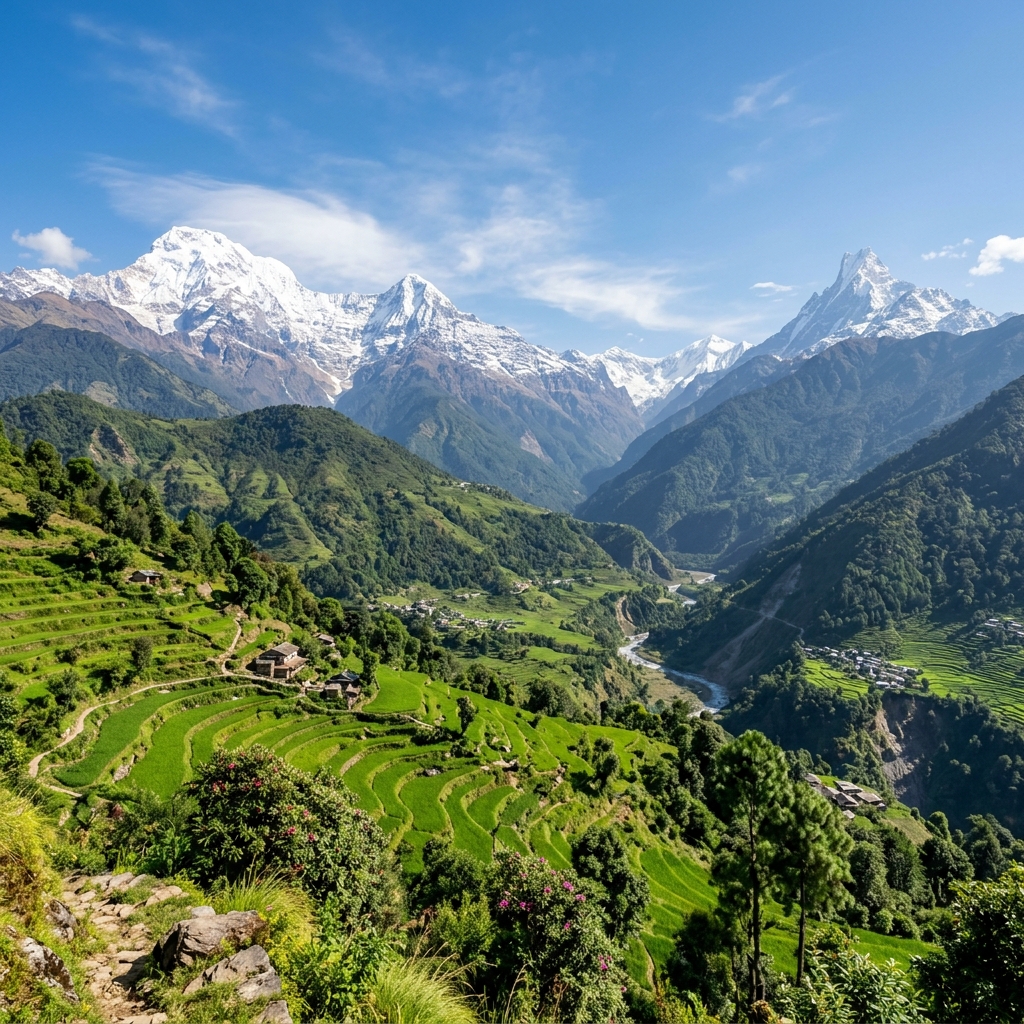
During the summer monsoon (June through August), humid oceanic air from the Bay of Bengal sweeps north across the Indian subcontinent toward Nepal. When these moisture-laden air masses collide with the colossal 8,000-meter barrier of the Annapurna Massif (8,091m) and Dhaulagiri (8,167m), they are forced rapidly upward (orographic uplift).
As the air cools adiabatically, it condenses and discharges over 2,500mm of torrential rain onto south-facing valleys like Pokhara and Annapurna Sanctuary. By the time the air crests the high mountain ridges and descends into the northern Kali Gandaki gorge and Dolpo basins, it has lost virtually all its moisture. The descending air warms (foehn effect), dissipating clouds and creating a high-altitude arid desert plateau bathed in golden sunshine.
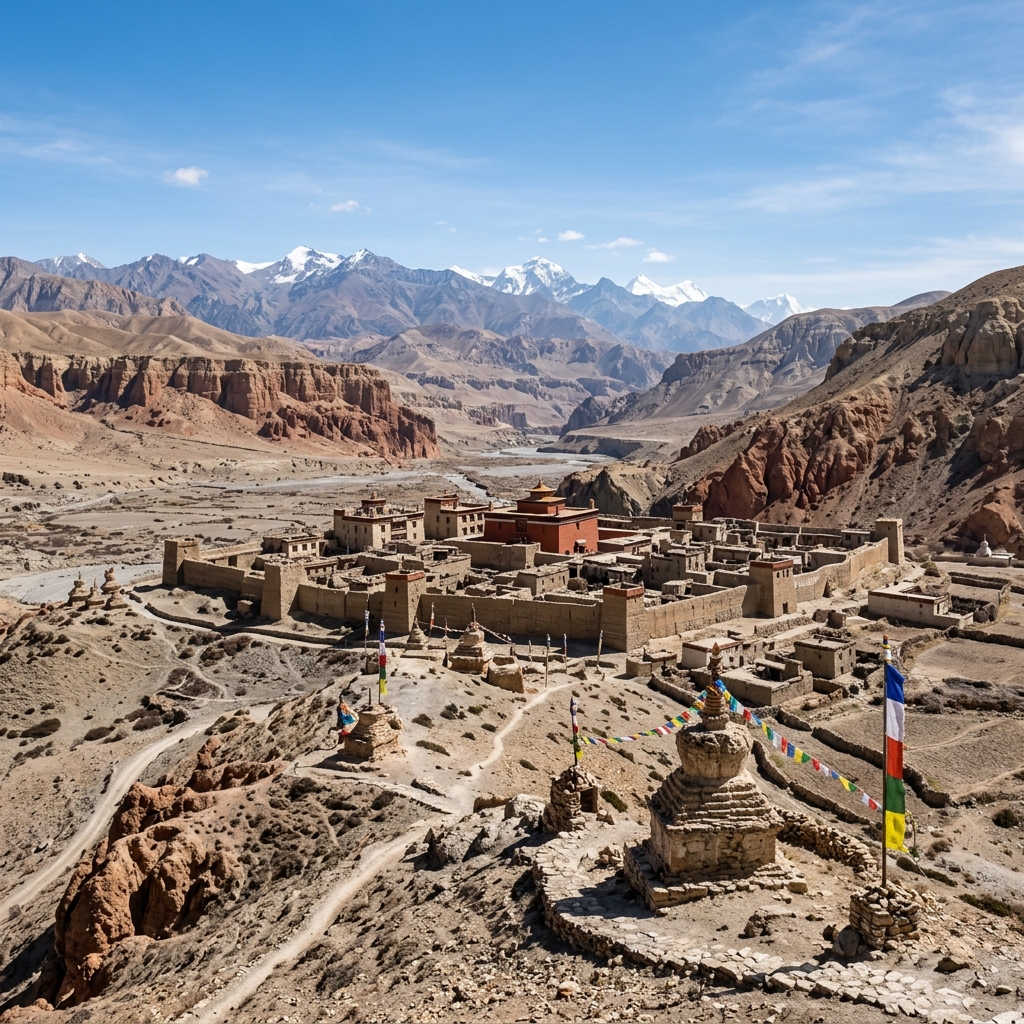
2. Upper Mustang in Summer: The Golden Walled Kingdom of Lo
Summer is arguably the finest, most culturally rich season to trek across Upper Mustang:
🌾 Emerald Barley Terraces
In July and August, centuries-old irrigation channels fed by glacial melt turn the canyon valley floors of Charang, Ghami, and Marang into lush emerald green and gold barley fields, offering stunning visual contrasts against ochre and purple sandstone cliffs.
🏇 Yartung Horse Racing Festival
Held annually in August across Lo Manthang and Muktinath, the Yartung festival celebrates the summer harvest with traditional Tibetan horse races, archery contests, monk masked dances, and colorful communal feasts.
🏛️ 2,000-Year-Old Chhoser Sky Caves
Explore the multi-story cliffside caves of Jhong and Nyphu, carved into vertical rock walls over two millennia ago. Summer offers clear sunny days with zero ice on cave ladders.
🧘 90% Less Crowds Than Autumn
While October brings hundreds of trekkers and jeeps, summer in Mustang is quiet, authentic, and peaceful. You will have ancient Tibetan Buddhist gompas and teahouses almost entirely to yourself.
3. Upper Dolpo & Lake Phoksundo: The Untouched Summer Wilderness
Upper Dolpo is Nepal's most remote, wild, and mystifying region—made famous by Peter Matthiessen's book The Snow Leopard:
💎 Why Summer is the Only Viable Season for Upper Dolpo:
Upper Dolpo sits at an average altitude of 4,000m to 5,300m. In winter and early spring, the extreme high passes—such as Kang La (5,360m) and Saldang La (5,200m)—are completely blocked by deep, impassable snowdrifts, and locals migrate south.
From June through September, the passes thaw completely, alpine wildflowers carpet the valleys, and the deep turquoise waters of Lake Phoksundo (3,611m) glow under clear blue skies. The ancient Bon-po and Tibetan Buddhist gompas of Shey Gompa and Ringmo are fully active with resident lamas.
4. Weather Matrix: Southern Monsoon Valleys vs. Rain-Shadow Desert
Direct meteorological comparison of July and August conditions across Nepal:
| Region & Valley | Monthly Rainfall (Jul/Aug) | Average Day Temp | Trail Conditions | Leech Risk |
|---|---|---|---|---|
| Pokhara / Annapurna South | 850 mm – 1,100 mm | +28°C (Humid) | Heavy mud, slippery rocks, landslides. | High (Abundant) |
| Everest (Lukla / Namche) | 350 mm – 450 mm | +16°C (Damp) | Cloudy, afternoon downpours, flight delays. | Low in Khumbu |
| Upper Mustang (Lo Manthang) | 15 mm – 25 mm | +22°C (Dry & Sunny) | 100% Dry, dusty, sandy trails. | ZERO (None) |
| Upper Dolpo (Shey Gompa) | 20 mm – 35 mm | +18°C (Pleasant) | Dry alpine trails, clear high passes. | ZERO (None) |
| Nar Phu Valley (Manang) | 30 mm – 45 mm | +20°C (Dry) | Dry gorge trails & open passes. | ZERO (None) |
5. Restricted Area Permits (RAP) & Entry Rules for 2026
Both Upper Mustang and Upper Dolpo are classified as sensitive cultural Restricted Areas by the Department of Immigration:
🏛️ Upper Mustang Permit Package
- ✓ Restricted Area Permit (RAP): $500 USD per person (covers first 10 days; $50/day extra).
- ✓ Annapurna Conservation Area (ACAP): 3,000 NPR (~$25 USD).
- ✓ Group Rule: Minimum 2 foreign passport holders.
- ✓ Guide Rule: Mandatory licensed Nepalese trekking guide.
💎 Upper Dolpo Permit Package
- ✓ Upper Dolpo RAP: $500 USD per person (10 days; $50/day extra).
- ✓ Lower Dolpo RAP: $20 USD per person per week.
- ✓ Shey Phoksundo National Park: 3,000 NPR (~$25 USD).
- ✓ Logistics: Mandatory licensed agency sponsorship & guide.
6. Interactive Rain-Shadow vs. Southern Valley Weather Comparator
Toggle between June, July, and August to see the dramatic weather difference between southern monsoon valleys and northern rain-shadow plateaus:
7. Summer Rain-Shadow Packing: What to Bring & What to Skip
Packing for Upper Mustang and Dolpo in summer is very different from packing for a freezing autumn or winter trek:
☀️ Essential Summer Gear
- ✓ UPF 50+ Sun Shirts: Long-sleeve breathable shirts for intense desert UV.
- ✓ Dust Buffs / Neck Gaiters: Mandatory for blocking afternoon Kali Gandaki canyon winds.
- ✓ Category 3/4 Sunglasses: High UV protection for bright sandstone reflections.
- ✓ Hydration System (3L): Desert dryness requires 3.5L to 4L of daily water intake.
- ✓ Lightweight Rain Jacket: For transit flights between Kathmandu and Pokhara.
❌ Items You Can Skip
- ❌ Heavy -20°C Arctic Down Parka: A lightweight 650–700 fill jacket or fleece is plenty.
- ❌ Heavy Waterproof Gaiters: Trails are dry and gravelly; no deep snow or mud.
- ❌ Leech Socks: Zero leeches exist in the dry trans-Himalayan desert.
- ❌ Heavy Mountaineering Crampons: Standard high passes are completely snow-free in summer.
8. 10 Uncensored Summer Rain-Shadow Secrets from Local Guides
Filter by category to explore insider knowledge from 30+ expeditions:
Trek Early to Beat the 11:30 AM Kali Gandaki Winds
Thermal heating in the Mustang desert draws air up through the world's deepest gorge (Kali Gandaki) starting around 11:30 AM, creating gusty head-winds. Start trekking at 7:00 AM to arrive by 1:00 PM in total comfort.
Monks are Resident in Gompas During Summer
In winter, head lamas migrate to Pokhara and Kathmandu monasteries to escape the freeze. In summer, every ancient monastery in Lo Manthang, Tsarang, and Ringmo is active with full butter-lamp puja ceremonies.
Book the First Flight (6:30 AM) from Pokhara to Jomsom
During summer, early morning flights navigate the mountain pass easily before cloud layers rise. If flights are grounded, a private 4WD overland jeep gets you to Jomsom in 6–7 hours.
Barley Fields Peak in Late July & Early August
For award-winning photography, visit during the barley harvest. The combination of green agricultural fields, white-washed village walls, and dry brown cliffs creates unmatched depth.
Wear Wrap-Around Sunglasses with Eye Protection
Fine desert sand blows across the trail near Kagbeni and Chele in the afternoons. Wrap-around sports sunglasses prevent irritating dust from blowing into your eyes.
Apple Orchards in Marpha & Kagbeni are Laden with Fruit
August is fresh apple season. Enjoy fresh apple cider, warm apple pies, and apple brandy at local teahouse orchards along the Kali Gandaki basin.
Jeep Backups Provide 100% Reliability
Unlike Everest (where Lukla has no road connection), Upper Mustang has a motorable dirt road from Pokhara to Lo Manthang. You are never stranded by bad aviation weather.
Desert Sunset Golden Hour Lasts Until 7:30 PM
Long summer daylight hours allow you to photograph the red cliffs of Drakmar and Lo Manthang under warm evening glow long after daytime winds have ceased.
Moisturize Lips & Skin Constantly
The dry desert air can cause skin cracking. Carry SPF 50+ lip balm and apply moisturizing cream every morning and evening.
Visit the Loba King’s Palace with Local Guides
Local Mustang guides have personal ties to the royal Bista family of Lo Manthang, granting our trekkers privileged cultural access to historical inner courtyards.
9. Frequently Asked Questions (FAQ) About Summer Rain-Shadow Trekking
Expert answers to the 10 most common summer trekking questions: